
Björn Carlsson Music
Imagination and Movement
On Music
Communication
Journey Home
Connections
Journey Home, from the orchestral suite All We Are, was composed as part of a visual and scientific journey exploring our place in the universe — from the largest structures known to science to the smallest.
The movement underscores an unnarrated part of the journey, where the music was allowed to speak for itself, capturing the voyage through space and time from the outer reaches of our existence and back home to Earth.
All We Are, in its full form, is an award-winning fulldome production created for the opening of Norrköping Visualization Center C and directed by Carter Emmart of the Hayden Planetarium at the American Museum of Natural History in New York.
The production received the Best Immersion award at the Immersive Film Festival in Espinho, Portugal.

Cosmic Microwave Background — NASA / WMAP
Family Portraits
Seen from far enough away, borders disappear. Places that seem separate become part of the same whole.
The cosmic background is, in one sense, the oldest family photograph we have — a record of the universe before stars, planets or people existed. Earthrise is another kind of family photograph: the first time humanity could look back at its own home as a single world.
One image reaches back towards our common origin. The other gathers us into a common place. Together they say something simple and profound: however different our lives may be, we belong to the same story.
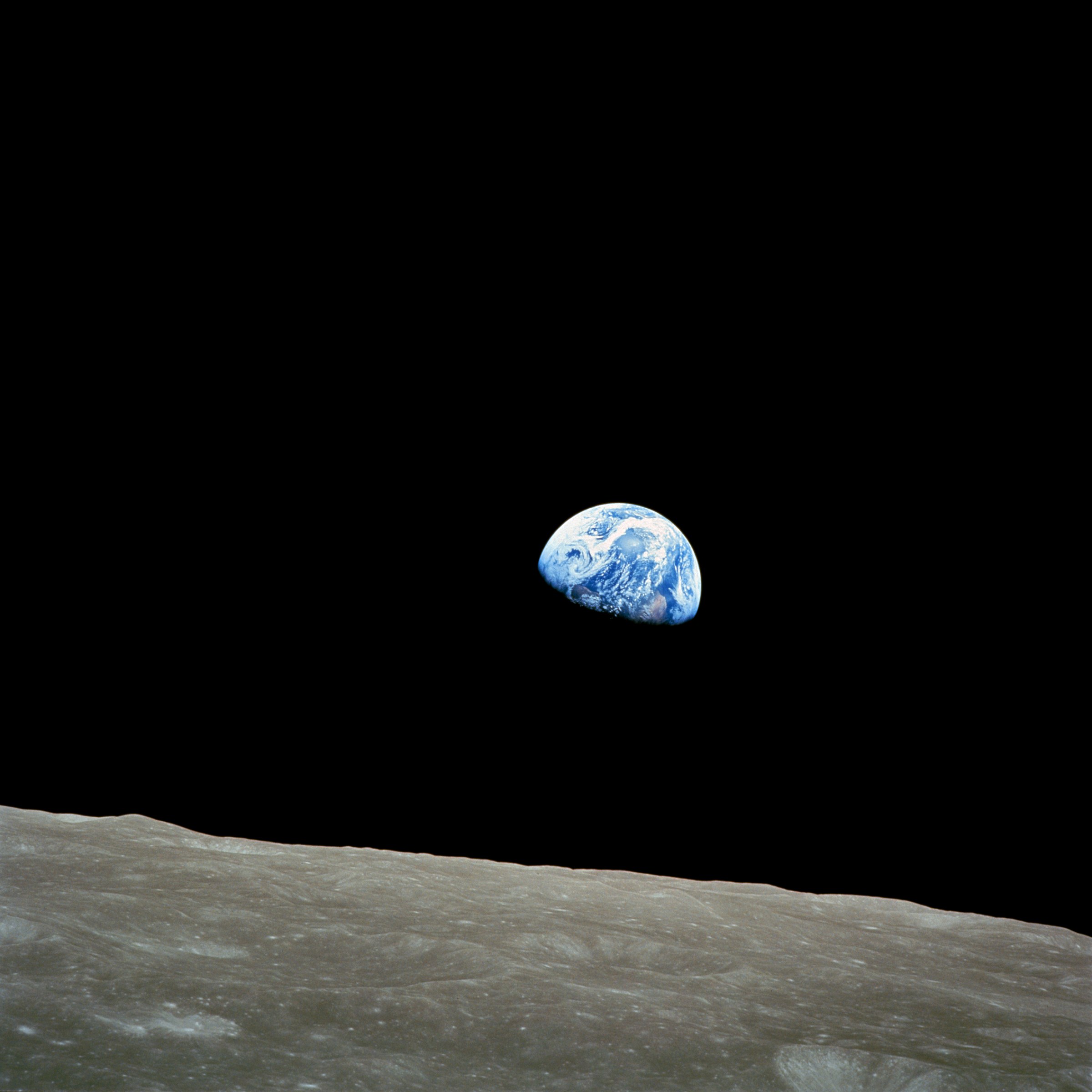
Earthrise — William Anders / NASA, 1968
Everyone who was alive then is somewhere in this picture. I was four years old, somewhere down there in Sweden.
Stage Art
The idea behind the work presented here is to use the forms of traditional stage storytelling through a contemporary musical, visual and theatrical language.
The aim is to challenge the audience to look again at familiar questions — what we value, what we pursue, what we overlook and what ultimately matters — while remaining entertaining, dramatically engaging and, just maybe, even a bit of fun.
It combines imagery and movement as a way of communicating — and of pondering complex matters.
The Scarecrow Ballet
Scarecrow is a modern ballet built around deliberately traditional storytelling — an old-fashioned tale of good and evil, shadows and light.
In Crowland, a battered scarecrow is brought to life by a little girl and drawn into a story of greed, cruelty and adventure — and, at its centre, an unexpected love where none seemed possible.
The narrative is intentionally classical in structure: a tale in which love prevails, even over death. The form, however, is contemporary — told through music, movement and imagery in a modern visual and sonic language.
The music is being developed as part of the larger stage work, alongside its visual development and choreography.
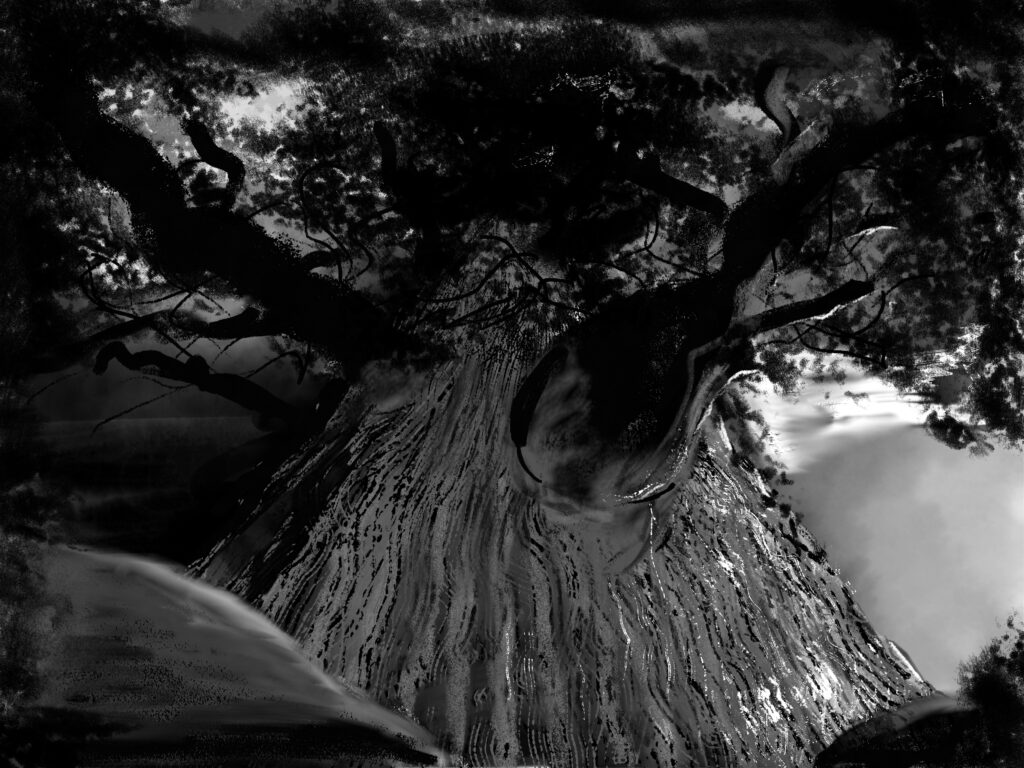
Castle of the Crows
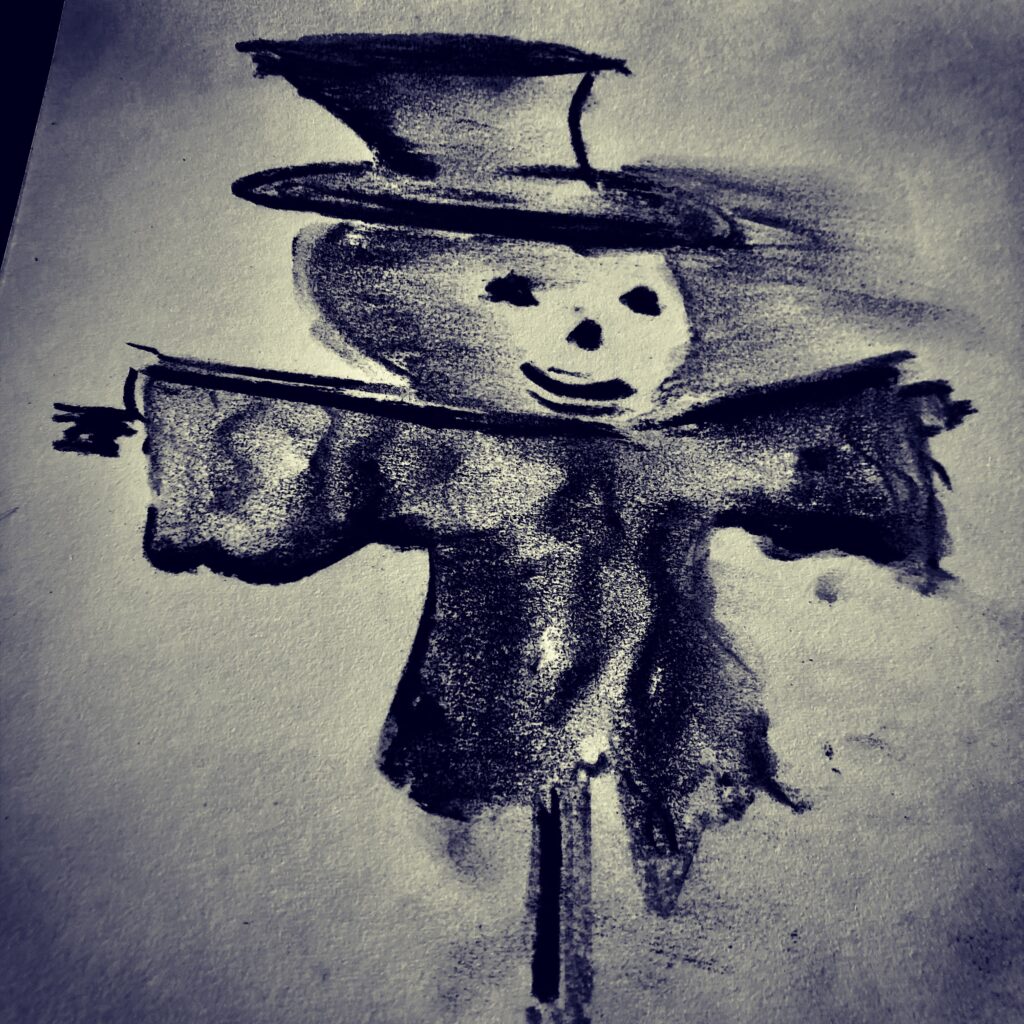
Scarecrow
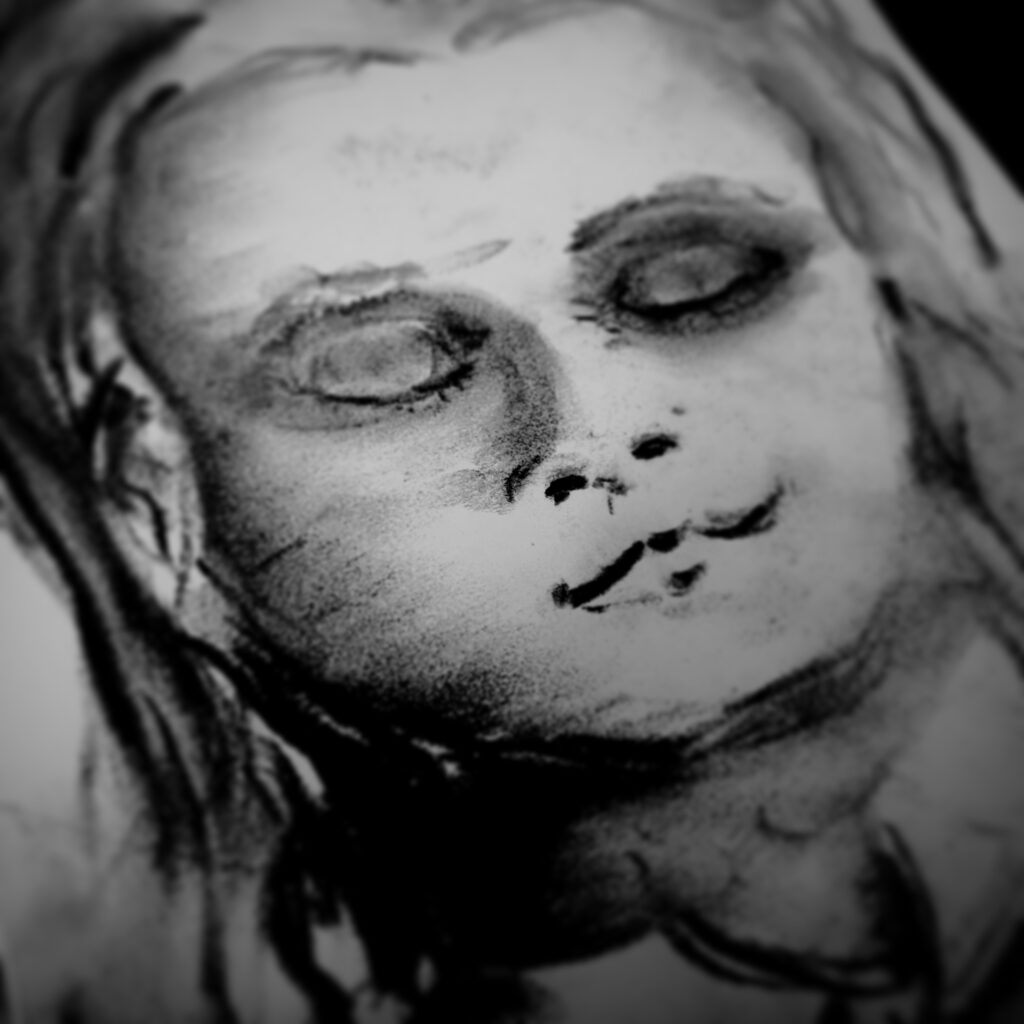
The Girl
Skydance
Skydance
Excerpt from Scarecrow, Tableau One
Scarecrow is, by nature, an awkward figure: extraordinarily intelligent, rather nerdy, and quite literally stiff in both arms and legs. Made of sticks and cloth, he is not built for a proper embrace. Nor is he any better at saying I love you.
Yet beneath his coat there is a heart — a large one — and it grows each time he tries.
The Girl with the Giant Eyes has the rare gift of seeing through things. She sees the heart beneath the coat. When she reaches for him to save him from the crows, her touch awakens him.
Skydance closes the first of the ballet’s four tableaux. Having just broken free, Scarecrow struggles through his first uncertain steps.
He does not know that she is the one responsible for his awakening, but when he catches sight of her, he loses what little composure he has managed to gather.
Once again she comes to his aid, showing him not only how to walk, but how to dance.
What follows is an at times wild and slightly twisted waltz, capturing both the tenderness and the absurdity of the situation.
And so they dance — until they leave the ground. A celebration of life and platonic love: deliberately naïvist, but nonetheless honest.
Music for Stories
Music has a remarkable ability to support a story — and, just as importantly, to alter the atmosphere, emphasis and even the meaning of what is being told.
Consider the effect of the score in Jaws. The images alone tell one story. The music tells us how to read it — when to anticipate danger, when to feel tension, when to understand that something unseen has entered the scene.
That ability to shape perception is central to music for stories. It can deepen character, redirect attention, create continuity and add layers of meaning that are never stated outright.
Here
Adrian Slips
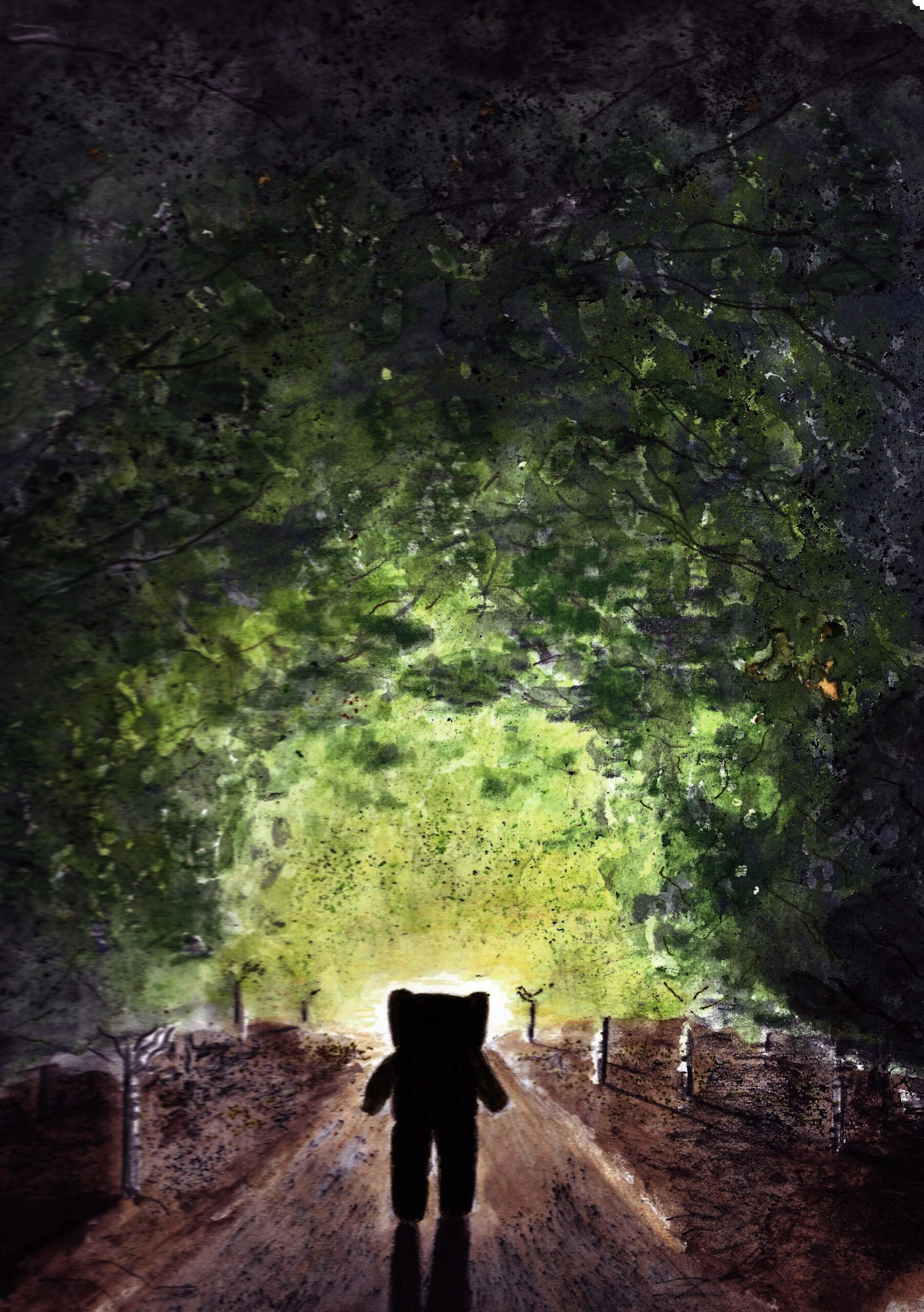
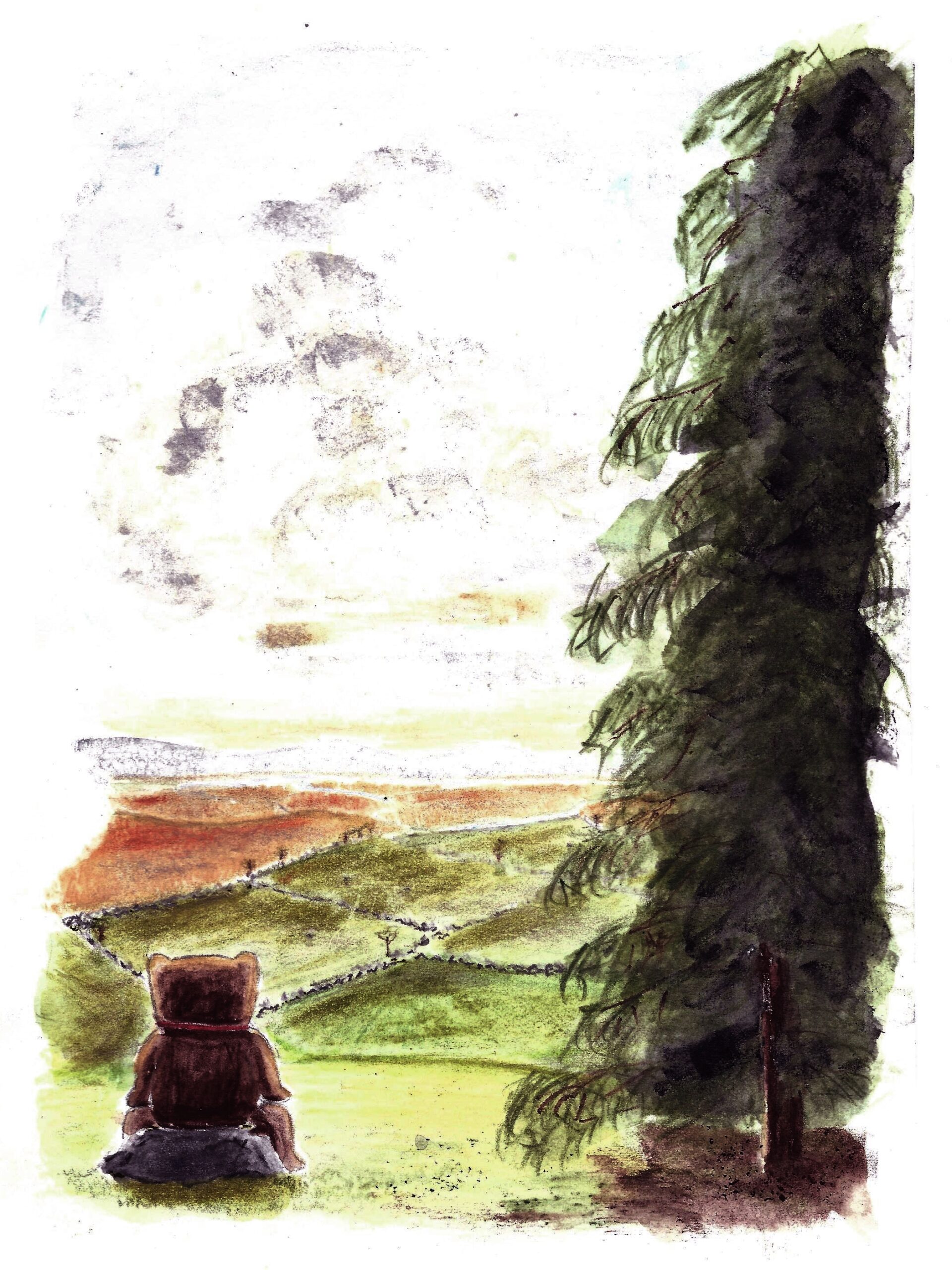
Adrian Slips is a story told for fun, but also with the purpose of awakening curiosity about the world — its places, people, animals and differences — and about the connections that make it whole.
Adrian loses his way and tries to find his way home. But the more he learns about the world around him, and the more characters he meets along the way, the more he begins to understand that everything belongs to the same larger whole.
In the end, homecoming is not a return to where he began. It is the moment when the world is understood differently.
The music follows the same idea. Eight short movements grow from a small set of recurring themes, gradually changing with Adrian’s perspective. Only in Here, the seventh movement, does the harmony truly shift — at the moment he realises that he is already home.
Story and music develop together: not as a journey of departure and return, but of experience, transformation and recognition.
See the Music
…hear the image
See the Music, Hear the Image® is a participatory project developed with professional symphony orchestras and schools.
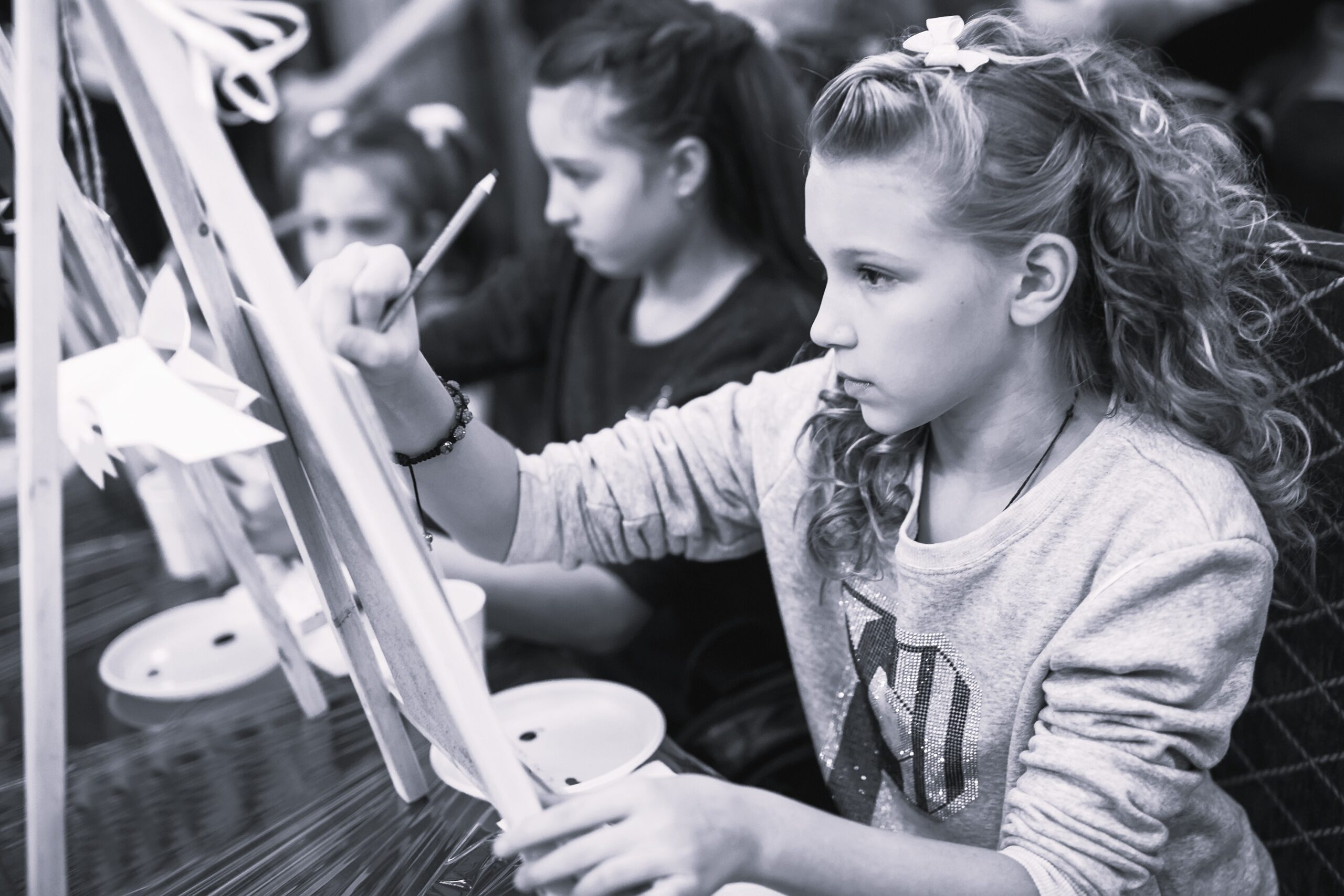
Children first meet the orchestra as fellow music-makers, exploring the instruments and how they combine to create sound. Each child then creates an image and invents short melodies inspired by it. These ideas are arranged and orchestrated in collaboration with the children.
Images come alive
The process culminates in a live concert, where the orchestra performs the children’s music while their original images are projected behind it.
Created by Björn and first realised in Halland, Sweden, in collaboration with the County of Halland Symphony Orchestra, the project demonstrated how children’s own ideas could be transformed into full orchestral expression — with strong response from children, parents and teachers.
The project is now moving into an international phase, bringing it to leading orchestras around the world.
Imagination and Movement
The world is not around us. It flows through us.
We let it in through our senses. We imagine it, form it within us, compare it with what we already know and allow it to change us.
Then we return something to the world through movement.
Sometimes the movement is almost invisible: a neural connection, a breath, the shaping of a word. Sometimes it is large and deliberate: building, operating, making, teaching, writing, dancing, playing music or painting.
This is also how we learn. We perceive, imagine, test, act, adjust and, maybe most importantly, we share, convey, teach, support — lend a hand. Then we begin again.
Mind and body are not separate from each other. They are one living system, continuously learning through this exchange between what comes in and what goes out.
The loop of imagination and movement never really ends. It is how we develop, how we contribute and, in a very literal sense, how we live.
Reach Björn through